www.medicalstetic.org

Friday, August 16, 2013

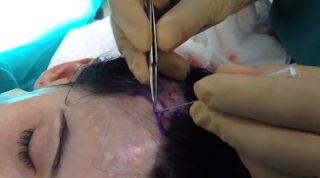
Timeout for post Hair Implant exercise


  How Long Until I Can Work out After Hair Transplant Surgery?

 I had hair transplant one month ago. Can I go to the gym and workout (gym exercises) now? Please tell me.  


Answer: 

    Our patients resume activity approximately 1-3 weeks post-transplant depending on the activity ,with the exception of swimming. In our practice, we instruct the patient to wait until we remove the sutures/staples (8 to 10 days) before going back to normal activity. That should allow an adequate amount of time for the grafts to heal in the recipient sites. Normal walking is permitted during this period Running can be done gradually after 3 weeks. Avoid swimming for another month because you don't want to soak fresh wounds. 

   The more active you are during this period increases the chances of having a more pronounced scar in the donor site..

                  www.ihic.org

Thursday, August 15, 2013

Hair Transplant Side effect


  Hair Transplant Side effect 

     What kind of side effects are possible with hair transplant surgery? Could your real hair end up falling out?


 Answer

 Hair transplants are very safe procedures with few side effects. In fact, a hair transplant is considered a "minor outpatient procedure." 

    The common side effects are swelling, minor discomfort, numbness, itching, and local inflammation. However, they are not severe and are temporary. infection and bleeding are minimal. The development of temporary numbness does not happen in every patient and is usally temporary (6-8 weeks or more) and does not effect the growth of the hair. The numbness is in the back just above the donor scar. 

   Very rarely a patient may experience shock loss (temporary loss), but this is temporary and the hair will grow back in 3-6 months . temporary loss after surgery is normal with transplants 

     Bad design of your new hairline may be a risk factor, but this is easily avoidable with an experienced surgeon, supporting staff, and good communication with your surgeon. If a donor strip is harvested, there is a chance of a widened scar which is easily corrected

Wednesday, May 15, 2013

Breast Implants and Liposculpture and Stretch Marks After Pregnancy?


I am 32 and I am planning to have a breast augmentation (something discreet) and a liposculpture within the next two weeks, but also I would like to get pregnant of my second baby in about 10 months. I did not get any stretch marks at all from my first pregnancy, but I am really concerned that the breast implants or the Lipo will cause them when I get pregnant again. Any opinions?


Brenda,


Stretch marks - Unlikely to be caused by surgery, but expected after pregnancy

Stretch marks ("striae") are a common occurrence after rapid weight gain or stretching of the skin, as in puberty or pregnancy
A breast augmentation and liposuction would be very unlikely to create stretch marks, so long as the breast implants were not so large that they caused massive stretching and tearing of the dermis of the breast skin. By a "discrete" breast augmentation, I assume you are aiming for a natural, subtle result. This would be highly unlikely to create any striae.

Stretch marks result from when the skin "stretches" beyond its ability to spring back and actually tears the deeper layer of the skin. The most common circumstances are pregnancy or significant weight gain. Why some women get stretch marks and others do not is largely a product of genetics and who their parents are. Unfortunately, not much else. You can control this to some degree by limiting or controlling your base weight, but with pregnancy, there is not much you can do.

Thus, taking away tissue in procedures such as liposuction, the likelihood of stretch marks is almost zero. Breast augmentation can result in striae, but in your case a "discrete" augmentation is very unlikely to cause this, especially when pregnancy did not result in abdominal stretch marks.

The biggest question is why undergo body sculpting and breast augmentation procedures less than a year before you intend to get pregnant again? If you were my patient, I would recommend that you weight until the next pregnancy is complete to begin your "transformation."

Unfortunately, I have had patients who did not develop stretch marks during their first pregnancy, but then did with second or third child. Thus, the surgery you need today may not be the one you need next year! If you weren't pursuing another child then I would say go for it; otherwise patience can be a valuable virtue.

You are lucky that you did not have stretch marks following your first pregnancy. This may be because of your age and genetics. Hopefully, you will continue to enjoy a body free of stretch marks. However, changes occur with each and every pregnancy, and you may discover some new striae after your next pregnancy.

Sunday, February 24, 2013

Tubular Breast, Are my Breasts Tubular?


   Hello, I'm an 18 year old female and ever since I was about 14 I've been concerned that my breasts are tubular. However, when my nipples are erect (as pictured) they look perfectly fine in my opinion. It's almost as if the tissue gets pinched back and creates a rounder shape. But I don't have naturally erect nipples, they're quite puffy. In your professional opinion, are they tuberous? Because I'm young, do I still have a chance of developing more rounded breasts in the future? 


Tubular breasts is a descriptive term that indicates certain features that are variably present to variable degrees. Some call it constricted breasts because the base of the breast is tight and as a result the breast tissue tends to herniated into the nipple causing the "puffiness" in the areola . The tuberous breast is small and often asymmetric. The difference between this scenario & small breasts is that small breasts are symmetrically smaller with respect to the circumference & center of the breast..


 You appear to have constricted breasts But you do not fit all of the criteria. Your nipple may have some tendencies of a tuberous breast however your breast is fairly normal on the whole . If you look carefully, the lower slope of the breast is a straight line instead of a gentle convex curve , with the right breast more tuberous than the left. . As in tuberous breasts , which the contraction literally prevents the breast contents from bulging forward and assuming a hemispheric shaper, yours have a bit of that characteristic .Also you do have some herniation of tissue into the areola along with a tight/"constricted" lower pole of your breast. . You have to remember that breasts come in all shapes and sizes. Very few are "perfect." Your breasts are going to develop the way they will and they will continue to change as you grow, age, become pregnant, etc. As you mature there is a chance of some improvement but It is unlikely that the general breast shape will change as much as you get older

 If you decide to correct this, it can be achieved through an augmentation where the inferior pole and the infra-mammary crease is released to prevent double bubble formation.. At the same time, herniated tissue behind the areola can be removed and this is done through the peri-areolar incision , and then doing some scoring on the inside of the lower pole. If only the areolar puffiness bothers you, it would be a relatively straightforward procedure to tighten the areolar area. This could typically be done under local anesthesia


 if you wished. Tuberous breasts are generally defined by the following: 

• short distance from the nipple --> infra-mammary fold 

 • dilated and/or "prominent" areola
           The issue with the tubular or tuberous breasts is that the lower aspect of the breast from nipple to breast crease is short (yours fits) and the nipple and areola are wide and allow the breasts to protrude through this area making them more prominent

 • loss of rounding to the lower pole with obvious constriction 
          In the tuberous breast the skin of the lower half of the breast remains attached to the chest wall &           does not grow with the remainder of the breast during puberty.

Tubular Breasts- Diagnosis and Surgical Treatment


One of the most common abnormalities of breast shape is called a tubular breast. Such breasts, also known as tuberous breasts or constricted breasts, result from congenital variation in the development of the breast tissue that can affect one or both breasts. Although there is considerable variation, tubular breasts all share some common features.


 Tubular breasts are characterized by some or all of the following: 
• Narrow and elongated shape
• Little or no breast tissue in the lower half of the breast 
• An areola (pigmented area around the nipple) that appears disproportionately large
• Protrusion of the breast tissue behind the nipple and areola that makes the nipple and areola look puffy
• A wide space between the breasts 
• Tendency for the location at which the underside of the breast joins the chest (known as the inframammary fold) to be relatively high on the chest, thus causing the breast to droop and look long and constricted.


   Keep in mind, that there is no such thing as a "normal" or "perfect" breast shape. The shape and appearance of women's breasts vary widely; what matters is whether or not you are happy with your breasts, not whether or not they are "tubular"

Surgical Correction 
Surgery to correct tubular breasts is challenging. The most commonly performed procedures almost always augment the breast, either with an implant or using a woman’s own tissue. In addition to adding volume to the breast, the base of the breast must be widened to a normal size, the inframammary fold lowered and the internal constrictions that caused the tubular shape must be released with internal incisions. In addition, the areola is usually reduced in size. 


Breast implants have traditionally been used to provide the volume needed to correct a tuberous breast. Although implants continue to be widely used, both perforator flaps and fat grafting can be used as alternatives to breast implants. By using your own tissue, complications unique to breast implants (implant leakage or rupture, rippling, and capsular contracture) can be avoided. Reconstruction using your own tissue means a having a reconstruction with tissue that is yours for life and without having to worry about needing to replace implants from time to time.. Since there is a great deal variability in the severity of tubular breast deformities, the approach or approaches best suited to you will depend upon the condition of your breasts and your goals for reshaping them.

Saturday, February 9, 2013

Small Breast Implant


 Question:
 I feel that my implants are way too small (I got 300 cc under the muscle). I feel like my surgeon did not properly advise me on choosing a size. I wear the same bra size! Any suggestions?

 Answer:

 Many, many women wish they had chosen larger Breast Implants. Most often the reason is that they were "afraid they would look too big" and expressed this fear to their surgeon.


 But you can always have surgery to increase the implant size, but if you just got the implants, my first advice is to wait a few months before considering a revision. The position and shape of the breasts does change in the initial postoperative period, so it is wise to allow some time for this. Also, if you have 300 cc implants in and wear the same bra size, you probably were wearing the wrong size bra either before or after the augmentation. I always tell patients we cannot guarantee a cup size because each brand of lingerie fits differently, and you can be completely different cup sizes depending on the brand. Generally speaking, 150-200 cc of added volume adds roughly a cup size, but each body shape and bra type is different so this is not a strict conversion. No surgeon should promise cup size, since there are no standards in size.

 If you are not happy with your current size, exchange procedures for bigger implants are very successful and there is much less pain and discomfort than the original procedure. Most of the time, the same incision can be utilized (no new scar) and all the pain and discomfort from the original stretching and pulling does not occur with the exchange procedure. Don't go doctor shopping. Why? Your surgeon is in the business of helping you fulfill your dreams and will try hard to get you where you want to be

 Doubt about proper breast size is at the top of the list. Right after the procedure I often hear that a patient may feel the implant is too big, and sometimes that the implant may be too small. As a rule these feeling diminish and patients become quite pleased.

 Therefore you need to wait at least 6 months to see how you really look, then make a decision.This is because the soft tissues need to accommodate to the implants. Initially, implants are placed in a pocket behind muscle, gland, fat, and skin. If the tissues are pliable, the implant can push the tissues forward easily, If things are tight, particularly the muscle, it might take a couple of months for the tissues to stretch and loosen up so the implant can do its work. When implants are placed below the muscle, they may appear 10% to 20% smaller because of the flattening effect of the muscle. Thus, implant sizers placed in a bra can create a look that's larger than the final size.

 Many times patients have said they wish to be a small "C" and will present pictures that are clearly closer to a "D" cup. There are a number of possible pitfalls when choosing the appropriate breast implant size. Usually people refer to volume but there are several other things to classify implant types . The implant width is probably the most important factor to know when determining an particular implant for an individual. The second most important thing is the profile. The profile refers to how much the implant sticks out from the chest. The higher the profile the more unnatural (stripper) the implant will look. The enlarging effect of an implant is also affected by the height, weight and chest width of the woman, so all of these factors need to be considered before surgery.

What is IPL?


IPL stands for Intense Pulsed Light. It basically lets you know that this is ”light based treatments” and not a true laser. That is scattered light which is generated from Xenon flash lamps and is not actually a laser. Lasers have light of a single frequency (color), IPL has many frequencies mixed together. Laser light remains collimated (narrow-focus).


 IPL spreads out like "regular" light. Lasers use one specific type of light and IPL devices use many. For this reason, IPL machines are marketed to be able to do a bit of everything, sun spots, facial redness and collage stimulation. The single wavelength of light used by lasers means they are more specific to the condition being treated.

The IPL is great for redness and brown spots, does very little for wrinkles, but can be used to tighten the skin if has the power to go into the infrared spectrum and use it for everything from leg veins treatment to acne scars and blond hair removal(no laser can do this) & telangiectasias . ACNE can be corrected too. Specifically, pigmented lesions such as freckles, sunspots, and age spots are treated .One of the signs of aging is irregular brown and sometimes red discoloration of the skin. These changes (called dyschromias) are due to sun damage, and are the usual reason women begin to wear foundation type makeup.

 IPL uses a bright light in front of which filters are placed which filter out most wavelengths except those taken up by pigment and blood vessels, depending on the filter used. The light energy penetrates just below the skin's surface, damaging either the melanin (skin pigment) or blood vessels , the energy of the intense pulsed light can be focused on a specific target within the skin. The range of light is typically between 500-1500 nm . light is concentrated in certain wavelengths.The body's natural skin repair mechanisms then remove the damaged tissue and produce a smoother skin appearance. It will usually take 3-5 treatments to see a significant result and treatments can be spaced out every 3-4 weeks. 

 The light energy in IPL is absorbed by the colors that we don't like, causing the generation of heat that damages or destroys the structure that holds the color - the sun spot or dilated blood vessel. concentrating light which is preferentially absorbed by dark and red spots and avoiding damaging the top layers of the skin. The body sees the structure as damaged and takes it away. This leaves the skin tone more even and homogeneous. IPL brightens the skin and gives it a youthful glow. This is a remarkably consistent result of IPL . Another, but more subtle goal of IPL, is to add small amounts of collagen back into the skin near its surface. This will not reduce wrinkles, but it does have an effect on the texture of the skin.

 So, a patient can expect 3 things from IPL:
1. It evens out skin color. 
2. It brightens the skin and give it a youthful glow.
3. It adds back small amounts of collagen near the surface of the skin to give a slight improvement in texture. 

IPL can be quite effective in reducing redness and pigmentation over a series of 3-5 treatments. Ethnic skin with pre-existing pigmentation problem should exhaust other modalities such as bleaching cream and/or microdermabrasion prior to IPL for there may be a risk of worsening pigmentation.

 The advantage to IPL systems is that downtime is usually very minimal. Immediately following the procedure the skin may look much worse. Patients may experience slight darkening of pigment before they lighten. You will look like you suffered from a sunburn . The procedure itself is usually described as feeling like a rubber band being popped on the skin. Patients are able to resume normal activities immediately after treatment and are not likely to experience side effects other than mild redness or swelling at the treatment site. The good news is usually 8-14 days later the spots will disappear and your skin tone should have a much clearer vibrant apperance. Most people can return to work the same day. You may feel the need to wear a bit of makeup on the skin to cover the areas that appear to be dark

 IPL treatments can rejuvenate aging skin, help patients with rosacea, and can also treat certain types of skin cancers. Number of treatments required to achieve desired results and length of results varies from individual to individual and can be dramatically altered by sun exposure. Dark spots that have been diminished with IPL can return to their original appearance or darker if not protected from the sun.

 IPL-RF is Intense Pulse Light with Radio Frequency. I have found that this gives a far superior result than the stand alone IPL treatments.

Saturday, December 1, 2012

Breasts Augmentation , Too High After Surgery


I am a little worried because I had a breast augmentation three weeks ago ( high profile silicone 350 CC's). they are too high , will they come down eventually? Should I consider another surgery, and if so, when? I have read that breast massages are very good to let them down, but I also read this is not recommended in texturized implants. Can you give me an advice?

 Answer: Implants may be slightly higher in the initial phase for several weeks, but they will come down if the pocket has been properly dissected. Many surgeons will use a compression band to combat this and also recommend downward massage efforts in the weeks following surgery.


 It is often the case that after breast augmentation, the implants seem to be too high. Your breast size is larger now and this results in that the breast feel too high, especially with high profile implants. Without doubt, they will come down and appear more natural with time. This is objectively true as gravity takes effect and the weight of your implants settle in.


 Since you are only three weeks out I would not begin to worry just yet The native inframammary fold appears high with a short and (at least mildly) tight inferior pole. The markings on the chest wall suggest that the inferior pocket was created for proper implant positioning. Certainly at 3 weeks post-op it is common to have implants positioned high since they have not had enough time to settle into place. If smooth surface implants were placed, there is certainly a good chance that these implants would settle into a lower position over several months, with potential stretching of the of the inferior pole skin occurring afterward; and this could be enhanced by implant displacement exercises and the use of a compression band over the upper pole.


 agree, your implants are too high on your chest wall. Having said that, I would be patient, the implants will "drop" or settle into place over time. I would wait at least 3 months and 6 months would be better. If the implants are still too high, than you will need to have them repositioned into a lower position. 


It seems that you have a "high crease", the distance between your nipple and the inframammary crease is too short. The surgeon should have lowered your crease during the procedure, if it does not happened. I would be surprised if you do not need a secondary procedure to correct this.

Monday, November 5, 2012

Capsular Contracture ,What is the Best Way to Treat it at Home?


Capsular Contracture ,What is the Best Way to Treat it at Home? 

    I would like to know if deep tissue massage regularly is the best way? using a massage machine that vibrates and pulsates at different levels regularly? also what about medicine? I appreciate any advice towards my question, thanks.


Answer:

 Capsules form around breast implants within days of their placement. The capsules are basically scar tissue that surrounds the implants .The formation of scar around the breast implant is normal as a breast implant capsule.. When it is excessively thick and/or tight scar tissue around the breast implant tight it is known as a capsule contracture. We do not know why or how this happens. For a variety of reasons muscle like contractile cells can appear in the capsule wall. When they contract we see/feel a hard breast (capsular contracture) with variable degrees of surface outline distortion, from the outside the breast implant is deformed from the capsule that is progressively shrinking. That is usually seen at months or years after surgery. The longer the contracture has been present the harder it is to treat and the more aggressive the treatment/surgery that is required. 


  and the severity of the capsule can be assigned to one of three categories:

 Category 1: Breast is more firm than usual, but not visibly different or painful
 Category 2: Breast is firm and visibly different in shape or appearence 
 Category 3: Breast is firm, visibly different, and painful 

      The best way to prevent capsular contracture is to do breast massages both medially and superiorly 3x per day. You should do this for at least the first year after breast augmentation and continue it daily thereafter for the duration of the implants to minimize closure of the capsule. Massage is usually recommended immediately following the surgery and can be continued for months to years , but is absolutely no scientific evidence that it helps prevent contractures.

    If the capsular contracture has only be present for a few days or weeks it may be amenable to non-surgical treatment such as deep massage. It really depends on how long you have noticed it…If it is just starting, then I have had patients have success with alternating deep massage. Home massage, however will not likely make a difference if the capsule is already significant or contracted.

     Endermologie (the combination of rollers and suction pressure applied to the skin surface) can be a good way to get the massage movement deep enough under the skin to stretch and soften the capsule.

    Singulair and Vit E can be used but likely have very little effect. Singulair is a widely used asthma medication that can sometimes help. This is an off label use of this medicine. but this does not necessarily work in every patient. Time likely will either help relax the capsule somewhat or keep it relatively unchanged 

      There is nothing you can do to treat established capsular contracture at home. Overly aggressive pressure maneuvers may cause damage to your implants. Finally surgery is an option to correct this by removing the capsule entirely or releasing it in areas to accommodate the implant.

Sunday, October 28, 2012

Breast Lift


BREAST LIFT

Many women, particularly those who have had children, will notice that their breast tissue will droop and “deflate” following breast-feeding. This phenomenon is not limited to mothers, however, as changes in weight as well as hormone fluctuations can cause these same issues. Some women, in fact, are born with breasts that may not be as “perky” as they would like. Many patients who complain of this breast deflation, or “breast ptosis” in medical terms, benefit from an elevation of the breast tissue, known as a breast lift or 


mastopexy 

Breast lift achieves the following:

  Brings the breast to a more attractive position 
  Reduces the size of Areola 
  Helps the breast to become more perky . 

There are several ways to go about providing true or apparent lifting of the breast tissue.

 Wise Pattern Breast Lift: 
The standard and effective technique to lift the breast is known as a Wise pattern mastopexy Classically, breast lifts were done through a pattern similar to classical breast reductions, resulting in a scar around the nipple, down the center, and underneath of the breast, which you can think of as an anchor type of configuration. While this operation works well for many patients, it provides a lot of scarring, and can, in certain patients, give rise to a breast that lacks proper projection. Efforts were subsequently made to try and improve the deficiencies of this operation, and a plastic surgeon named Dr. Lejour developed a breast surgery that eliminated the scar under the breast and improved postoperative breast form. This is called the vertical mastopexy.


 Vertical Breast Lift:
 The vertical mastopexy has become one of the mainstays of the breast lift here in my practice. This operation works well for most women who do not have massive breasts, and allows some degree in reduction of the size of the breast if this is what you are looking for. Alternatively, the vertical breast lift can be combined with a breast implant in order to increase the breast size. In either situation, the scars from this vertical breast lift look like a lollipop- around the nipple and down the center of the breast. The concept behind the vertical mastopexy is the rearrangement of the breast tissue itself to a higher position, rather than creating a skin sling to suspend the breast tissue. This breast tissue rearrangement is felt to give a more pleasing shape and a longer lasting result.


 Benelli Breast Lift:
 For those patients that require only minimal lifting and who may be adverse to the longitudinal scar of the vertical breast lift, an alternative may be what is called a purse-string, or Benelli mastopexy. This operation is performed by resection of an eccentric area of skin around the nipple, which can be thought of as an oval shaped doughnut where more skin is resected above the nipple than below it. Following a small amount of dissection in the breast tissue to strengthen the breast lift, this incision is closed with a purse-string suture that “cinches” the breast envelope centrally and upward to provide a lift. The scar resulting from this breast lift operation is only around the nipple along the transition between the pigmented areola and the skin of the breast. This operation does have the limitation of lifting the breast tissue only one to two centimeters, however, and so only patients with minimal ptosis may be candidates for this procedure.


 The Use of Breast Implants With Your Breast Lift: 
With any breast lift procedure, the result may be enhanced with the ancillary use of a breast implant to increase volume and fullness. 
A breast implant may be used with the classic breast lift, the vertical breast lift, or the Benelli breast lift procedure. Placement of large breast implants during these procedures is discouraged because of the following safety issue. When dissection of the breast tissue is performed in order to achieve a higher and more youthful appearance, careful attention must be given to the blood flow to the breast tissue that is being rearranged. Large implants placed under this dissection can put undue tension on the lifted breast tissue, causing compromise of the nipple. breast implants that are not excessively large may be used at the time of your initial breast lift operation as a single procedure. Discussion regarding your individual anatomy and expectations will allow a plastic surgery plan to be tailored to your specific situation. The quality of scar can also be improved if your surgeon is committed and places deep suture to avoid widening of the scars

Saturday, October 27, 2012

Scarless Breast Lift


Scarless Breast Lift

I'm sort of on the verge of needing a breast lift and wondering if the scars are not worth the trade-off... what kind of incisions or techniques leave the least amount of scarring?
Marian


Answer :
This is a great, and very common question. The principle thing that I would recommend to you is to avoid compromising the form of your breast for fear of the scarring. Any qualified plastic surgeon will be able to minimize the scarring with suture techniques, and although there are no guarantees, you should hopefully end up with fine white lines for your scars that progressively fade with time. You are better off having a great breast form and a little more scarring than a breast shape that is inadequate or unattractive with one scar less.
If you are indeed borderline, it is likely that you will require less, rather than more incisions to re-create a youthful breast form. Several options with or without breast implants are available to you, with varying degrees of correction and size changes. The key is choosing the right operation for you, and that involves a careful discussion with a caring and qualified plastic surgeon.
There is not some thing as a scarless breast lift.  The real question is do you need a lift and if so how much. Some patients with very minor or grade one ptosis with obtain a lift and increased fullness with breast augmentation alone. Others require minimal lift which can sometimes be done with only a periareolar incision and and implant. In the majority of cases a better lift is achieved with  the addition of at least a vertical incision

This is a brief outline of the scars that can be expected after a breast lift, in order of increasing amounts of preoperative breast sagging:
1.  Scar Around the Top Half of the Areola:  this is best for patients with no more than an inch of nipple/breast sagging and no need for entire breast reshaping
2.  Scar Around the Entire Areola:  this is best for patients with about an inch of nipple/breast sagging and need for minimal tightening of the breast skin
3.  Scar Around the Areola and a Vertical Scar Down the Breast:  this is best for patients with a moderate degree of breast/nipple sagging, some loss of superior breast fullnes, and need for moderate reshaping of the breast. 
4.  Scar Around the Areola, Down the Breast, and in the Breast Crease:  this is best for patients with significant breast/nipple sagging, total loss of fullness of the superior breast, and need for total reshaping of the breast.
In select patients, the scar burden necessary to perform a breast lift can be minimized by simultaneous placement of a breast implant.  A breast implant is able to affect a small degree of breast lift and restore superior breast fullness without the need for larger scars associated with a traditional breast lift.


Breast lift achieves the following:
·        Brings the breast to a more attractive position
·        Reduces the size of Areola
·        Helps the breast to become more perky(Agile)
It is important to know  If the skin and fat above the nipple in the upper poles of the chest are adequate then a subglandular placement with silicone implant would probably give you the most natural look and feel  . Subglandular placement is acceptable if you have at least 2cm of tissue pinch in the upper pole.
If you have minimal ptosis (or sagging) of your breast, a subglandular placement might give a nice result with fewer scar lines or incision lines, If you have significant sag then I would  typically recommend a submuscular implant with a complete breast lift, though you will have more scars.
   A dual plane mastopexy with a reasonable size implant can give your nipple a lift and move your breasts off your chest wall.  It will also give you fullness in the upper quadrant. 


Why do breasts sag?                                                                                                                                                      There is too little volume or too much skin. Many women, particularly those  who have had children, will notice that their breast tissue will droop and “deflate” following breast-feeding. This phenomenon is not limited to mothers, however, as changes in weight as well as hormone fluctuations can cause these same issues. Some women, in fact, are born with breasts that may not be as “perky” as they would like.


Greater degrees of excess skin require greater amounts of skin removal, resulting in larger scars. 
I believe  in taking an aggressive approach to scars in this situation, with progressive suturing techniques and postoperative scar treatments as a complimentary service to my breast lift patients, so that they will never feel like the improved shape was not worth the scars they have.
 I also strongly believe that the technique for breast lifting should be determined by the patient's goals for breast shape, and the shape they are starting with. Each different technique (I do 4 different types) will tend to produce a characteristic change in the shape of a breast, and so the technique needs to be matched appropriately to the patient, using her examination and her goals as guides- otherwise you may end up with a small scar, but a funny or unfavorable breast shape.
The degree of lifting and the amount of scars required to restore to you a youthful and toned breast depends on how much droopiness you have. The key relationships are where the nipple lives relative to the crease under the breast and whether it points forward or downward. The farther down, the farther it needs to come up to look good and the more incisions it takes to get there. The other key issue is the degree of horizontal skin laxity or excess skin present.
.
Some patients have a periareolar or "Benelli" lift, with an incision just around the areola, in hopes of avoid the incisions of a conventional Wise pattern lift. When a large breast lift is attempted through such an incision, characteristic problems can occur, with gathering of the incision, decreased areolar circulation (some patients can actually have nipple death), and large resultant nipple-areolar complexes. It is in my opinion a mistake to attempt too great a lift through too small an incision Periareolar.When lifts require an implant , They are good for patients whose needs for lifting are less with their nipples above the crease and pointing forward to start with. If overextended, this lift will result in a flat, baggy looking breast with a large areola with poor scars around it. Vertical lifts, "L" lifts, short"T" lifts and full"T" lifts are the next level and can be done with or without implants. They have more scar but provide a better looking conical projecting breast in the hands of an excellent sculpting surgeon. Nobody wants scars but everybody wants the best shape and the scars are a trade-off for that. They fade with time and generally most all patients will trade their best shape for the scars to get there
here simply is no way to perform a breast lift surgery without some type of scar. The only thing that can be done is to try to optimize the position or quality of the scars that are made. In general, the best scars are seen when incisions are placed under the least amount of tension.The good news is that most of the scars fade nicely and are specifically placed to be as inconspicuous as possible
The idea of a scarless surgery is an attractive one ,  It is better to think of it as minimizing the length of any scar and optimizing its position in order to obtain the best result.

Sunday, October 14, 2012

Liposuction, Liposculpture , Liposelection - What's the Difference?!


Liposuction, Liposculpture , Liposelection - What's the Difference?!

Question
What is the difference between all of these types of lipo: Liposuction, Liposelection, Liposculpture? What type works the best?
Helen


Answer:
Liposuction is the basic technique, the simultaneous mechanical breaking down of fat together with suctioning using a tube attached to a vacuum device (aspirator) .But We sometimes use the word  liposculpture, because we are focusing on shape more than on volume (we always focus on both) which suggest superior results.
Liposuction is formally referred to as Suction Assisted Lipectomy, whereby fat cells are removed using a small cannula and a vacuum assisted device. The technique is well recognized, safe, and commonly used by most plastic surgeons. Recent advances have changed the scope of liposuction to include an added benefit of not only removing the fat through suction, but also dissolving the fat with energy. The energy types are ultrasound energy (VASER) or laser.


The process of ultrasound assisted liposuction is well documented and involves a process of cavitation, whereby sound waves are used to break open and kill fat cells prior to the liposuction. This results in improvement in contour for patients. Basically the result you will get depends far more on the nature of your skin and its ability to shrink , A small amount of heat can have the beneficial effect of causing more contraction of tissues. Heat also increases the chance that the body may respond by making more fluid (called a seroma, which may need to be drained). Then in the 90's, ultrasonic liposuction was introduced from Europe with the idea of breaking down the fat first and then removing it. This was thought to be less traumatic to other tissues like blood vessels and fibrous supporting tissue.

Liposelection i
s a name coined by the makers of one current generation of ultrasonic-assisted liposuction machines , They call it Vaser ultrasonic liposelection. The reason for the name is that the way the ultrasonic energy is generated both at the tip and along the shaft of the probe makes the fat cells split apart from each other .,Vaser is useful for treatment of areas that are densly fibrous such as the back and male breasts ,gynecomastia ,. When used for a lipo-abdominoplasty, it is great because it allows "lipo-sculpting" of the abdomen and torso at the same time.

 You can also have laser-assisted liposuction, such as the SmartLipo Triplex. SmartLipo is a machine that has a laser to melt the fat.  The fat has to be suctioned out in addition to the fat melting part. The devil is in the details here - if the surgeon that is doing the liposuction doesn't do a good job getting the patient numbed up or doesn't do a good job getting the fat out, you can end up with a mess on your hands.

"Liposculpture" is just a usage that connotes an artistic approach to contouring. You might say it means that what is most important is what is left behind, the final shape. Since the underlying body is obscured by excessive fat, the removal of that fat to reveal the body shape can be called lipo-sculpting , either with the aid of ultrasound or with laser energy (Smart Lipo, etc).

Questions:
0034_913862327
www.medicalstetic.org


Wednesday, May 9, 2012

Side Effects of Hyalurnic Acid


Question:
I am planning on having Hyalurnic Acid done on the lines that lead from nose to jawline. Has anyone had any bad side effects from this filler?
Answer.
Hyaluronic Acid  is abundantly present in your skin.Rare complications may occur, It has been in use for many years and overall is a very safe treatment. Ac. Hialuronico  has proven to be a fantastic treatment for the nasolabial folds and other   facial wrinkles


 Although there are a lot of rare side effects that one will hear about, the most common side effects are temporary and not dangerous which are typically covered by makeup in the relatively unlikely instance they are noticeable, These include pain at injection site, swelling, bruising, redness and lumpiness. The redness and lumpiness will resolve without any complication.


Icing (cold compresses ) immediately after injection will reduce the swelling and the risk of bruising.  Ac. Hialuronico  can also  cause some urticaria like reaction at injection sites, which resolve shortly after injection. Side effects increases when injecting the frown lines between the eyes so I would use caution and inject only a small amount

 Two mainly complications are  bruising and lumpiness. Bruising  disappears in  2 days (or longer if you take Aspirin, Vitamin E, Garlic, Gingko or Ginseng) avoiding aspirin and anti inflammatory medication for two weeks prior to your injection and one week after . Lumpiness can be corrected at the time of the injection by massaging. there is also a condition called the Tyndall effect which occurs when  hyaluronic acid product is injected too superficially.  This effect is seen as a bluish or grayish haze on the skin and can be reversed with hyaluronidase (an enzyme that breaks down Restylane) injections. 

There are also very, very rare reports of allergic or inflammatory reactions to Ac. Hialuronico(note: this is true with any of the fillers). infection, hematoma, discomfort, asymmetry, undesirable effect  are posible  and rare complications. This filler  around the eyes has a higher chance of untoward effects and must be applied with great care. The other very  rare complication is plugging up a blood vessel that can “choke” off the blood supply to the overlying skin which create a bad scab and then a discolored permanent scar. Hyaluronidase can be used immediately if this is noted and the filler gets dissolved and the complication can lessen.You should see the full-effects of your treatment in 7-14 days. 


Saturday, April 21, 2012

Cellulitis , Treatments


Question:

I'm looking for a good cellulite treatment. Are there any cellulite treatments that are more effective than others? What are my options?
Answer:

I'm looking for a good cellulite treatment. Are there any cellulite treatments that are more effective than others? What are my options?
……………………

……………………….
The best single way to reduce cellulite is to lose weight through a great diet and regular exercise. Everything else we provide as doctors is second best to this solution. True cellulite is caused by irregularities in the very superficial fat of the skin. Cellulite is caused by excess fat cells pushing out on the skin from underneath and fibrous bands pulling in on the skin.  Unfortunately, that is very close to where the blood supply of the skin is, in the subdermal plexus
There is no way to actually get rid of cellulite although there are treatments to reduce its appearance. All of the following treatments have been touted for their effectiveness in either decreasing or eliminating cellulite
Endermologie treatments incorporated with diet, exercise and drinking plenty of water will offer the best results to fight cellulite.Endermologie is a painless and noninvasive mechanical massage that stimulates the reactivation of fat release and production of collagen and elastin.With a series of at least 10-14 weekly treatments Endermologie produce visible improvement in the cellulite.Once your desired results are achieved, returning for treatments once a month for maintenance is recommended. Endermologie temporarily improves the look but if you stop the treatments, 2 months later all the cellulite is back.
Radio frequency devices will also temporarily help the problem but not completely . Alma Accent :skin cellulite can be improved with this new unipolar radiofrequency device, with fewer treatments and longer lasting results as compared to older options. The older options have typically been bipolar radio frequency and low-level laser devices which have been proven to produce mild skin tightening of cellulite; this new treatment is far more sophisticated . .Another the non-invasive procedure is called Thermage . Thermage is extremely safe, and it takes about one and a half hours in the office. There is no anesthesia, no down time, and no scar. So, for many women, it is worth a try. La radiofrecuencia produce un calentamiento profundo de la piel y del tejido graso que aumenta la circulación de la zona, favorece el drenaje linfático, permite mejorar el metabolismo del tejido graso subcutáneo y estimula la formación de colágeno de las capas más internas de la piel. Este calor consigue de forma inmediata el estiramiento del tejido cutáneo reduciendo los signos de flacidez y deja la piel más tersa. Se utiliza para el tratamiento de la celulitis, de la flacidez, para mejorar la piel.
Cellul
ite is a difficult problem to fix , creams, massages and ultrasound  can  help but are not  so efective. Also, in my opinion, treatments such as lipolysis, mesotherapy,have limited efectiveness.
Microcanula liposculpture improves cellulite by breaking these little fibrous bands and by removing the fat cells pushing out on the skin. It is done under local anesthesia and is probably the only permanent way to help cellulite. Although it is not 100% effective, it is the best we got at this time. Liposculpture at deep levels can sometimes break the septae, or interconnections of deposits of fat, and thereby reduce (not eliminate) the appearance of cellulite. It can certainly make the appearance of cellulite better.